

Welcome!
You have reached the virtual home of Geo Takach, Professor of Communication and Culture at Royal Roads University, found on the traditional lands of the Lekwungen and Xwsepsum families and ancestors on the southern shores of what are sometimes called Vancouver Island, British Columbia and Canada.
My photo of Esquimalt Lagoon at sunrise (above) shows part of the southern rim of the campus, surrounded by 565 acres of Pacific-Coast rainforest. Here we are overlooking the Olympic mountains in Washington state, which are barely visible above the spit of road separating the lagoon from the Strait of Juan de Fuca, flowing between Canada and the USA.
This site highlights some of my adventures in the academy. Happy exploring!
New feature film: Shih (Interconnectedness)
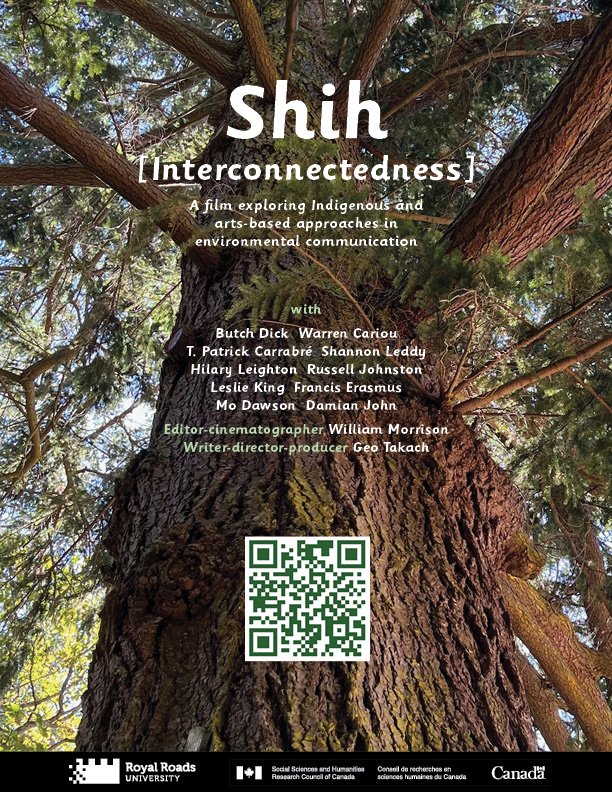
See the film trailer here.
Behold the backgrounder here.
Upcoming book: Environmental Communication and Conciliation
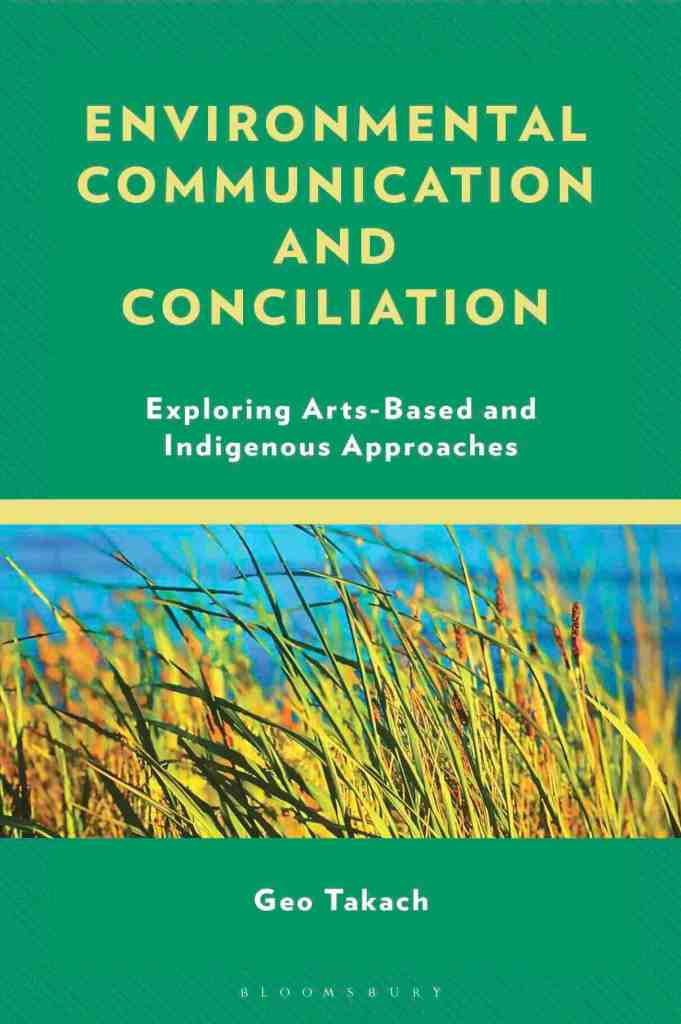
Environmental Communication and Conciliation: Exploring Arts-Based and Indigenous Approaches, is slated for publication by Bloomsbury on February 19, 2026 (published in the US in December 2025).
This book explores methods of bringing environmentalist, art-based and Indigenous ways of knowing and being into dialogue to improve relationships with the Earth and Her First Peoples.
I argue that two of the greatest crimes committed by humanity – environmental devastation and the continued dishonour, dispossession and attempted eradication of Indigenous peoples – are entwined and need to be addressed together. I consider causes and challenges common to ecological and human colonization. Joined by a generous array of Indigenous (and a couple of non-Indigenous) knowledge-keepers, artists, scholars and citizens, I aim to show how we can interweave environmental, arts-based and Indigenous perspectives and collaborative meaning-making in our communications to inspire what I call environmental conciliation.
This work is endorsed by some scholars that I find highly inspirational: John Borrows (U of Toronto), Shannon Leddy (U of British Columbia) and Patricia Leavy (US-based grand oracle of arts-based research).
You can read a bit more about this work here and on Bloomsbury’s website.
 Environmental Relations