

Research ethic
I liken conducting research to visiting a train station. We all mill about while the great, big train of human thought and understanding comes rushing through. When it stops, we researchers grab our toolkit, we swarm around the engine, and we tinker, fix, shine, buff, add and polish. An all-too short time later, we hear the train whistle and we pull back just as the train doors slam, the engine fires up, and the train chugs off to its next destination. In that minuscule moment that we have, we try to boost the grand engine of human thought.
It’s a humbling privilege to work with people who want to learn, and to have the opportunity to help to create more knowledge and understanding. I feel a duty to share that learning—not just because my research is publicly funded, but also because it’s the right thing to do. Indigenous traditions treat knowledge as community knowledge. If our goal is for the greater good, then it behooves us to share our knowledge in accessible, engaging and inspiring ways that can make a positive difference in the communities that we serve.
Research goals and methods
I am drawn to the creative, collaborative and empowering potential of research. I seek to depolarize public dialogue and inspire collective action towards positive change on environmental concerns, social and economic justice, and democracy. I critically interrogate forces and values underlying public environmental communication and share my results through traditional scholarly dissemination (publications, conferences, teaching), arts-based formats (periodicals, films, theatre, art-gallery exhibitions and spoken-word performances) and community events (bookstore readings, town-hall meetings). Through arts-based methods, I gather, synthesize, analyze, reflect on and share my research through film, performance, podcasts and more. This is a departure from, and complement to, methods traditionally used in the science-rooted field of environmental communication.
Featured work
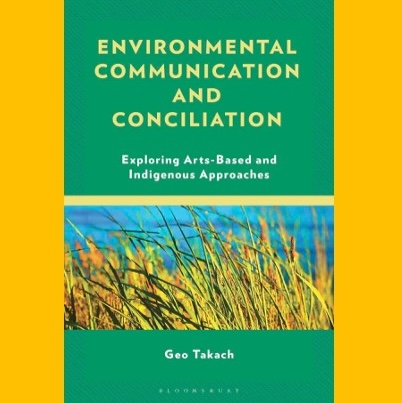
Environmental Communication and Conciliation (2026)
A book dialoguing environmental, arts-based and Indigenous ways of knowing towards improving relations with the Earth and Her First Peoples
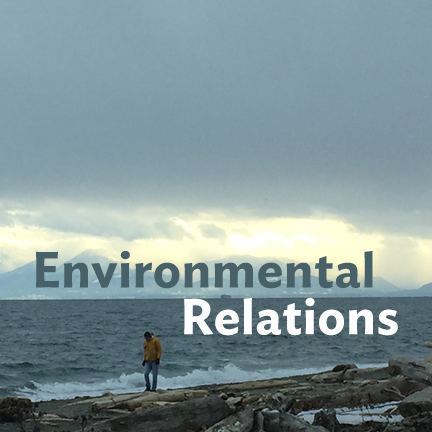
A short-film response to Indigenous and environmental thought (collaboration with visual designer Bonnie Sadler Takach)
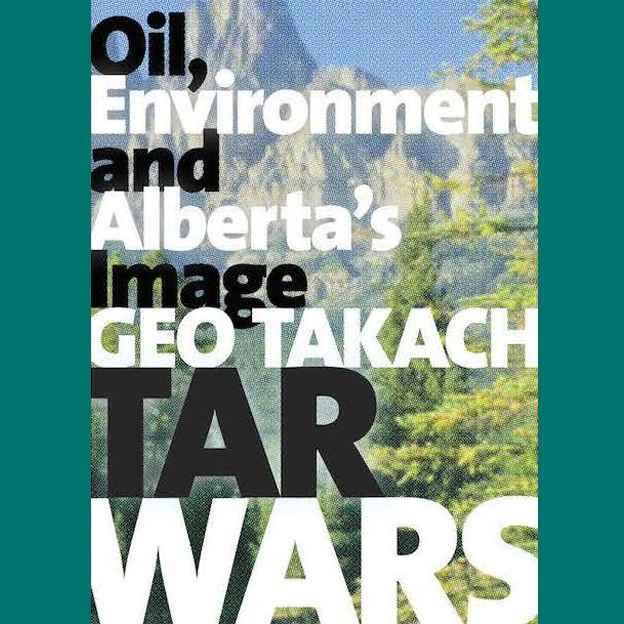
A book exploring the international
PR war over Alberta’s stewardship of what some call the world’s dirtiest oil
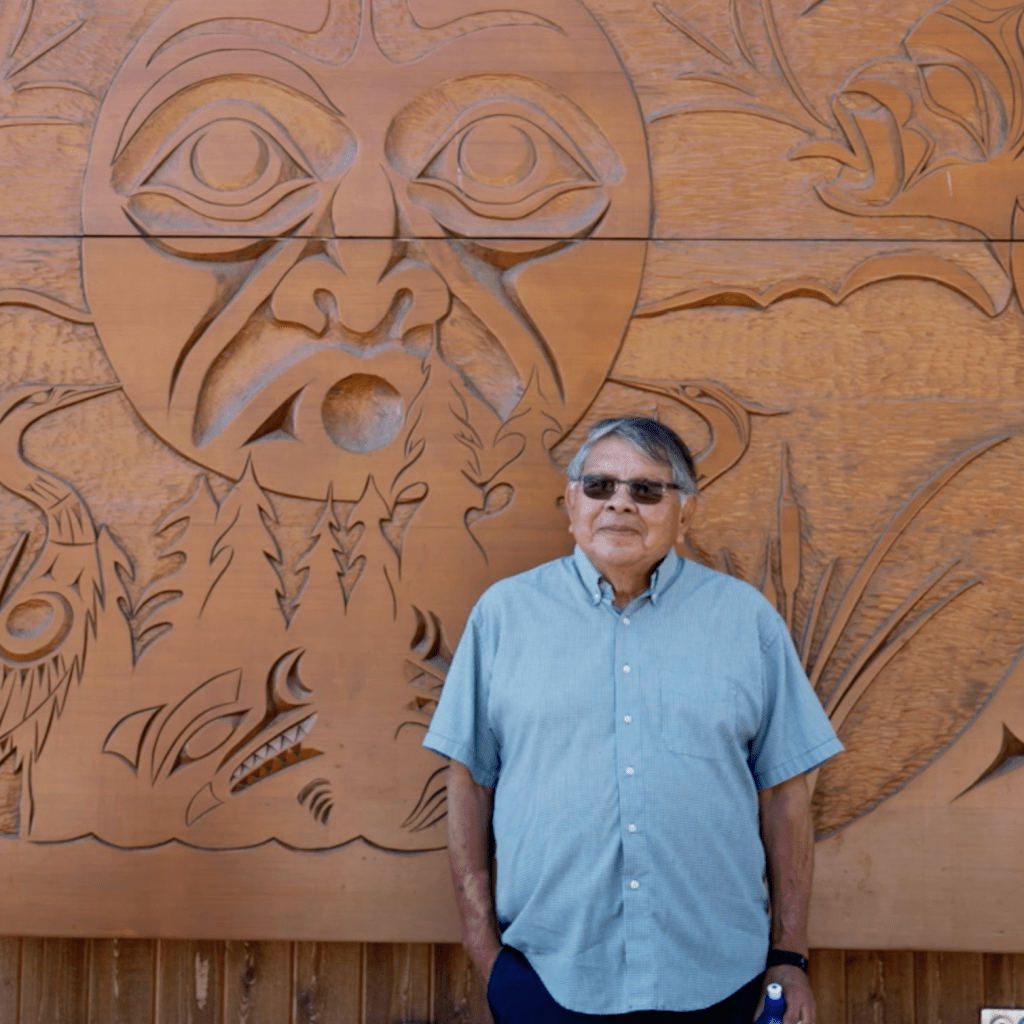
A trailer for a feature-length film exploring environmental, arts-based and Indigenous ways of knowing
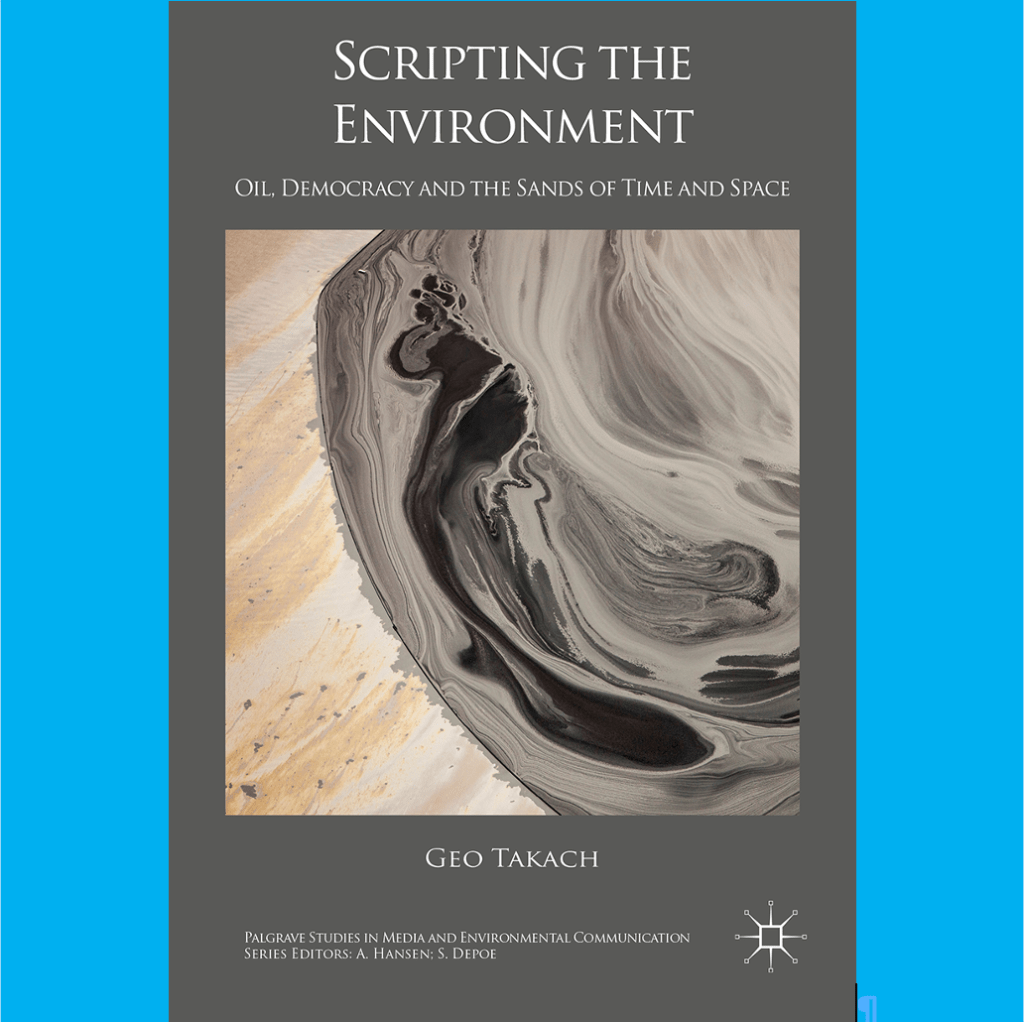
A book making the case for arts-
based research in environmental communication
A short film placing diverse and conflicting voices on bitumen development into dialogue in an aural, visual and musical narrative
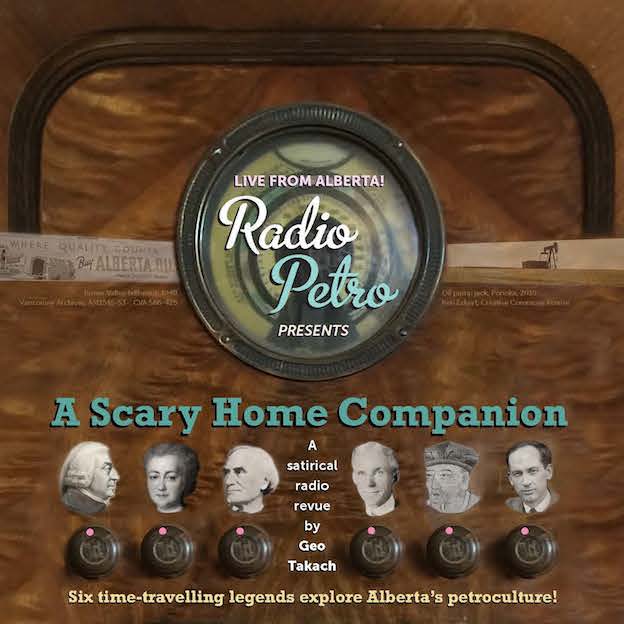
An old-time radio variety show with six famous time-travellers weighing in on our petroculture (event poster)
Scholarly projects (selected)
Books
Environmental Communication and Conciliation: Exploring Arts-Based and Indigenous Approaches. New York: Bloomsbury, forthcoming on 19 February 2026. Part of a series in the publisher’s Lexington Books imprint titled Environmental Communication and Nature: Conflict and Ecoculture in the Anthropocene. Aims to share and inspire ideas to help us reduce our society’s mighty bootprint on the Earth and its First Peoples. Engaging Indigenous and non-Indigenous thinkers, knowledge-keepers, artists and communication practitioners, this work allies arts-based, Indigenous and environmental thinking and practice in a new, holistic approach. It explores causes of our colonizing land, air, water and people, plus daunting challenges to changing business-as-usual, in building a theoretical model for this tripartite alliance and then sharing practical, creative approaches to communication strategies towards repairing relationships to build a kinder and fairer legacy for the Earth and its diverse denizens.
Tar Wars: Oil, Environment and Alberta’s Image. Edmonton, AB: University of Alberta Press, 2017. 296 pp. Explores the rising PR war over Alberta’s tar/oil sands through its visual vanguard, with independent documentary films critiquing the province’s environmental stewardship, and videos from the Alberta government and the oil industry defending it (See the book trailer!)
Scripting the Environment: Oil, Democracy and the Sands of Time and Space. Cham, CH: Palgrave Macmillan, 2016. 236 pp. Makes the case for more humanities-oriented, arts-based research in environmental scholarship, presenting results from my studies in the form of scripts for film, theatre and digital productions; endorsers include Bill McKibben, author and co-founder of 350.org; Dr. Phaedra Pezzullo, co-author of a leading text on environmental communication; and Dr. Patricia Leavy, a leading scholars in arts-based research
Will the Real Alberta Please Stand Up? Edmonton, AB: University of Alberta Press, 2010. 432 pp. Blending prose, interviews and historical reenactments exploring elusive essences of Alberta, this book garnered media coverage (e.g. Toronto Star, Calgary Herald, Edmonton Journal, This Magazine), positive book reviews (e.g. Journal of Cultural Geography, The Goose), a brief foray onto the independent non-fiction bestseller lists in Calgary (#1) and Edmonton (#8), and a gold medal for “Best Regional Non-Fiction” at the Independent Book Publishers Association awards in New York City in 2011
Patents: A Canadian Compendium of Law and Practice (Edmonton, AB: Juriliber, 1993). 480 pp. Reviewed in the Canadian Bar Association’s magazine, National (Nov–Dec 1993, vol. 3, no. 8), as an indispensable work in the field, and cited as legal authority by the World Intellectual Property Organization’s Standing Committee on Patents, nine times by the Federal Court of Canada and once by the Supreme Court of Canada
Reviews of my books
Alley-Young, Gordon. “Tar Wars: Oil, Environment and Alberta’s Image.” Canadian Journal of Communication 44(3), 2019.
Doan, Holly. 2017. “Review: Fort Mac versus Hiroshima.” Blacklock’s Reporter, 25 March 2017.
Dusyk, Nichole. 2017. “Lights, Camera, Action, Debate: Documentaries about Alberta’s Tar Sands Between 2004 and 2014 Have Helped and Hindered Public Debate.” BC Booklook, 5 October 2017.
Norris, Rob. “Tar Wars: Oil, Environment and Alberta’s Image.” Alberta Views 20:10 (October 2017): 58. .
Wandersee, Sarah. “Will the Real Alberta Please Stand Up?” Journal of Cultural Geography 29:1 (February 2012): 126–128.
Krahn, Carolyn. “Rats, Mavericks, and Oil Rigs: Steer-Wrestling Alberta Stereotypes.” The Goose 10 (Winter 2012): 86–87 (journal of the Association for Literature, Environment, and Culture in Canada).
Bowling, Tim. “Will the Real Alberta Please Stand Up?” New Trail (University of Alberta), Spring 2011, p. 43.
articles
(with intrepid research assistant Kyera Cook) “Decolonizing Environmentalism: Addressing Ecological and Indigenous Colonization through Arts-Based Communication.” Environmental Values 33:5 (2024): 529–549, https://doi.org/10.1177/09632719231224115.
“Eco-comedy.” Environmental Humanities 14:2 (2022): 371–374. https://doi.org/10.1215/22011919-9712445.
“Interweaving in/on the Air: A Scripted Synthesis of Indigenous and Settler Knowledges for Environmental Protection in Resource Development.” Qualitative Inquiry 27: 8–9 (2021): 1072–1083.
“Interweaving Indigenous and Settler Knowledges for Environmental Protection in Resource Development and Indigenous Conciliation in Canada.” Journal of Canadian Studies, 55:1 (2021): 5–30.
“Ticked Talk Radio: Responding Inly to Finley.” Cultural Studies—Critical Methodologies 14:6 (2014): 1–9 (Special issue on “Critical Arts-Based Inquiry: The Pedagogy and Performance of a Radical Ethical Aesthetic”).
“Selling Nature in a Resource-Based Economy: Romantic/Extractive Gazes and Alberta’s Bituminous Sands.” Environmental Communication: A Journal of Nature and Culture 7:2 (June 2013): 211–230.
“Flickering Lights vs. Footlights: A Script.” Paperweight: A Newspaper of Visual and Material Culture 1:1 (Autumn/Winter 2010): 12–13.
“Projecting Knowledge Management: Screenwriting as a Tool for Knowledge-Sharing and Action.” Journal of Knowledge Management Practice 7:1 (2006). 5,000 words.
“Turning Terror into Discovery: Traditional Narrative Strategies and Interactive Educational Media.” In Proceedings of Ed-Media 2002: World Conference on Educational Multimedia, Hypermedia and Telecommunications (pp. 1924–1925). Edited by P. Barker and S. Rebelsky. Norfolk, VA: Association for the Advancement of Computing in Education, 2002.
book chapters
“Active Learning through Arts-Based Inquiry.” In Active Learning for Real World Inquiry (pp. 175–184). Edited by Doug Hamilton, Elizabeth Childs, and Richard Kool. Victoria, BC: Royal Roads University, 2023. https://pressbooks.bccampus.ca/activelearningforrealworldinquiry/
“Allying Arts-Based and Indigenist Approaches for Environmental Protection and Social Justice.” In Transformative Visions in Qualitative Inquiry (pp. 119–138). Edited by Norman Denzin and Michael Giardina. London, UK: Routledge, 2022.
“Creating an Ecoaesthetic: Integrating Arts-Based Research into Courses on Environmental Communication.” In The Pedagogy of Environmental Communication (pp. 102–111). Edited by Tema Milstein, Mairi Pileggi and Eric Morgan. New York, NY: Routledge, 2017.
“Live from Alberta! Radio Petro presents A Scary Home Companion.” In Petrocultures: Oil, Energy, Culture (pp. 479–497). Edited by Imre Szeman and Sheena Wilson. Montreal, QC and Kingston, ON: McGill-Queen’s University Press, 2017.
“Identity.” In Fueling Culture: Energy, History, Politics (pp. 189–192). Edited by Imre Szeman, Jennifer Wenzel and Patricia Yaeger. Bronx, NY: Fordham University Press, 2017.
“Alberta’s Environmental Janus: Andrew Nikiforuk and Chris Turner.” In Writing Alberta: Building on a Literary Identity (pp. 71–89). Edited by Donna Coates and George Melnyk. Calgary, AB: University of Calgary Press, 2017.
“Selling Nature in a Resource-Based Economy: Romantic/Extractive Gazes and Alberta’s Bituminous Sands.” In Visual Environmental Communication (pp. 61–78). Edited by Anders Hansen and David Machin. London, UK: Routledge, 2015. (Reprint of journal article noted above)
“Visualizing Alberta: A Battle of Branding, Nature and Bituminous Sands.” In Found in Alberta: Environmental Themes for the Anthropocene (pp. 85–103). Edited by Robert Boschman and Mario Trono. Waterloo, ON: Sir Wilfrid Laurier University Press, 2014.
Films
Shih (Interconnectedness), a feature-length documentary film (release slated for autumn 2025), trailer/pilot presented at the annual conference of the Environmental Studies Association of Canada (12 June 2024) and fine cut advance-premiered at Royal Roads University (20 March 2025) and 18th biennial Conference on Communication and the Environment (27 June 2025).
Environmental Relations, a short film presented at the 17th International Congress of Qualitative Inquiry (21 May 2021) and the 16th biennial Conference on Communication and the Environment (23 June 2021).
Eco-Comedy: A Rough-Cut Primer presented at the 16th biennial Conference on Communication and the Environment (24 June 2021).
Voices from the Visual Volley: Filmmakers, the Tar Sands and Public Health, short documentary premiered at InSight 2: Engaging the Health Humanities, juried international exhibition at the University of Alberta, Fine Arts Building Gallery, 14 May–8 June 2013, and selected for inclusion in Brain Storms: UAlberta Creates, juried exhibition of artwork at Enterprise Square Gallery, University of Alberta, 25 September 2015–23 January 2016
Popular media
“Canada Day: Why Renaming Roads and How We Tell Stories Matter for Reconciliation.” The Conversation, June 29, 2023. Republished by outlets including Yahoo News.
“Comedy Should Punch Up, Not Kick Down.” The Conversation, June 21, 2022. https://theconversation.com/comedy-should-punch-up-not-kick-down-184705. Republished by outlets including Yahoo News (https://ca.news.yahoo.com/comedy-punch-not-kick-down-151441173.html) and The National Post (https://nationalpost.com/pmn/news-pmn/comedy-should-punch-up-not-kick-down).
“Climate Change or Climate Crisis? It’s All in the Framing.” National Observer, 17 October 2019.
ART-EXHIBITION CATALOGUES
“Voices from the Visual Volley: Filmmakers, the Tar Sands and Public Health.” Abstract. In InSight 2: Engaging the Health Humanities. Edited by Lianne McTavish and Pamela Brett-MacLean. Edmonton, AB: Department of Art and Design, University of Alberta, 2013. p. 71.
InSight: Visualizing Health Humanities. Edmonton, AB: Department of Art and Design, University of Alberta (co-editor with B. Sadler Takach, P. Brett-MacLean and A. Rowe), 2012.
Conference presentations (Refereed)
“Making New Worlds Together from the Margins: International Premiere and Sharing Circle for Film, Shih (Interconnectedness).” [screening of feature-length film]. 18th Biennial Conference on Communication and the Environment, International Environmental Communication Association, Hobart, Australia, 27 June 2025
“Depolarizing Dialogue on Climate Change through Intercultural Communication (and Eco-Comedy!).” 18th Biennial Conference on Communication and the Environment, International Environmental Communication Association, Hobart, Australia, 25 June 2025.
“Dialoguing Environmental, Indigenous and Arts-Based Approaches Towards Sustaining Shared Futures.” Annual conference of the Environmental Studies Association of Canada, Congress of the Humanities and Social Sciences, 12 June 2024.
“Linking Environmental, Arts-Based and Indigenous Voices for Sustainable Futures.” 17th Biennial Conference on Communication and the Environment, International Environmental Communication Association, Harrisonburg, VA, 7 June 2023.
“Engaging Authenticity through Arts-Based Research” [convenor, organizer and chair of organizational partner panel from International Environmental Communication Association, “Engaging Authenticity in Environmental Communication through Arts-Based Research and Pedagogy”], 73rd annual conference of the International Communication Association, Toronto, ON, 29 May 2023.
“Eco-Comedy: No Laughing Matter.” 18th International Congress of Qualitative Inquiry (virtual). May 20, 2022.
“Allying Arts-Based and Indigenist Approaches to Enrich Environmental Appeals.” 16th Biennial Conference on Communication and the Environment, International Environmental Communication Association, 23 June 2021.
“Eco-Comedy: A Mock-Up Primer” [artist’s performance]. 16th Conference on Communication and the Environment, International Environmental Communication Association, 23 June 2021.
“Teaching Environmental Relations” [panel]. 16th Conference on Communication and the Environment, International Environmental Communication Association, 22 June 2021.
“Allying Arts-Based and Indigenist Approaches for Environmental Protection and Social Justice.” This slideshow could not be started. Try refreshing the page or viewing it in another browser.
 Environmental Relations