

On environmental and Indigenous relations
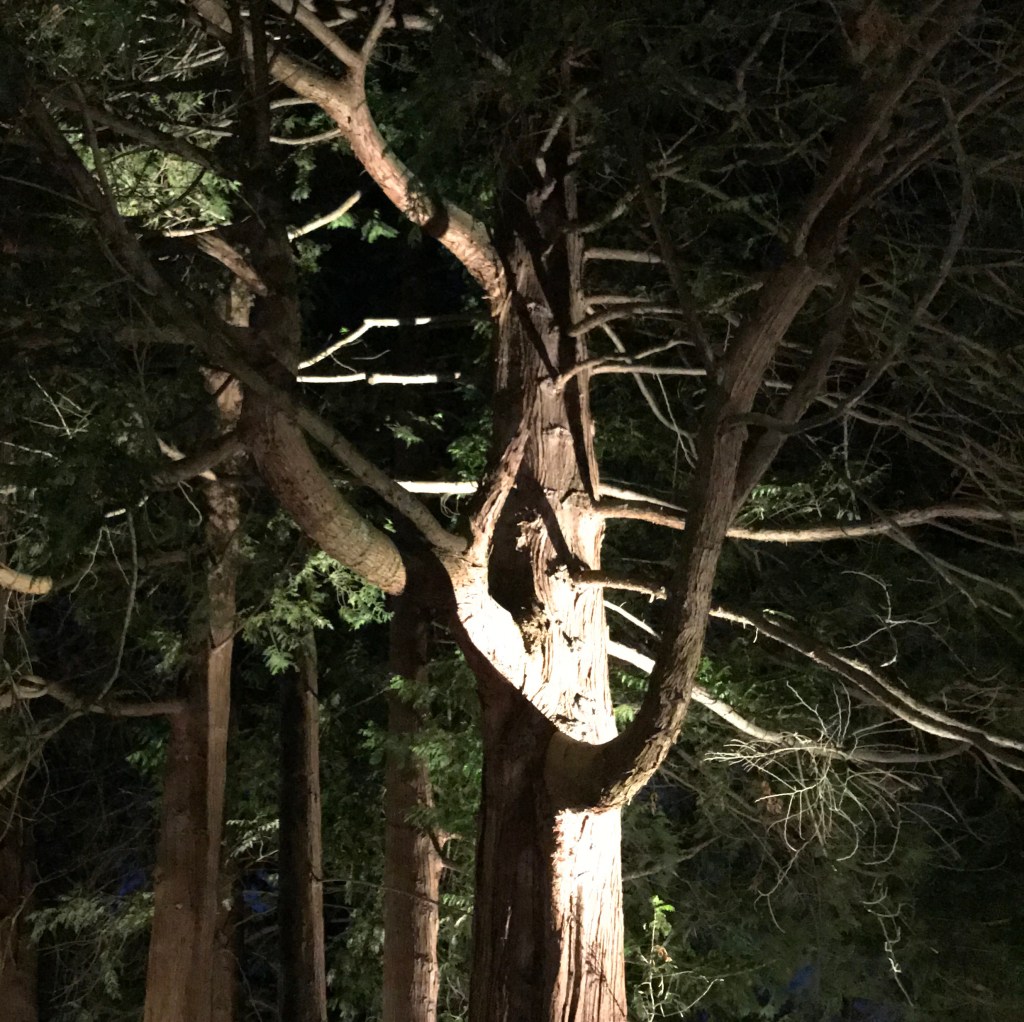
Author’s photo from the traditional, ancestral and unceded territory of the Musqueam people, at the University of British Columbia, November 2019
21 December 2024
My current research starts from the premise that perhaps our greatest problem is detaching ourselves from the environment and subordinating it to our own desires, in the belief that we can do whatever we want with nature and other people. Why? Because we know best and our rights and freedoms are supreme. That thinking has led to colonizing the environment as well as Indigenous People throughout our history.
At the heart of redressing that colonization is the concept of relationships. Thinking of the world more holistically. Being mindful of, and accountable to, the natural world and to all forms of life. And repairing relations that have led to conditions that are not only physically and biologically unsustainable, but also homicidal, suicidal and just plain morally unjust.
To my mind, this invokes Indigenous notions of reciprocity. That people depend on the environment and each other. That everyone should be able to benefit others and benefit from others. That the Earth gives us gifts which we honour by taking only what we need and giving back however we can. And of course, all relationships depend on communication.
Communication is how relationships are formed, enacted and maintained. It’s how you are accountable to yourself and to others: certainly through what you do, but also through what you say.
Settlers can continue to colonize the Earth and other people, for example, by calling nature a ‘resource’ or mentioning our or Canada’s Indigenous Peoples, when neither are actually anyone’s to own. Nor are they here to be colonized.
I believe both nature and people have value in their own right. Even the term Anthropocene, framing our impact on the Earth in geological terms and often invoked by sources friendly to the planet, seems to centre humanity’s role in the universe.
This human hubris may stem, at least partly, from the so-called ‘Enlightenment’ way of coming to understanding the world: by dissecting things and parcelling them into silos, disconnected from each other.
Here’s an example. Energy industries ‘externalize’ the costs of extracting coal, oil and gas. Meaning that nobody is expected to pay for the environmental costs—or nobody who receives a paycheque that week from wresting it from the ground, anyway. The companies get their profits, the shareholders get their dividends, and the people who live on, near or downstream from the drilling/mining (plus their children, grandchildren and beyond, and by extension all of ours as well) bear the losses. Because of the golden rule that whoever owns the gold makes the rules.
That’s what happens, and keeps on happening, when you colonize the environment and people. We don’t think about it like that, but that’s the secret power of colonialist and other abusive systems.
Their underlying assumptions are baked into whatever we say and do. They seem not only normal, but also the only way, the natural way, to be and to behave in the world (e.g., it’s good for the economy, so we do it). We create what Dr. Gabor Maté titles his recent bestselling book, The Myth of Normal, the phenomenon that people and a society in prolonged trauma accept that as business-as-usual. (At least it’s the devil we know, right?)
So what can I try to do about all of this, even in a minuscule way?
Rooted in the field of communication and culture, my work aims to help repair our relationships with the Earth and Her First Peoples. I’m surfacing the assumptions behind the myths we create around colonizing planet and people; identifying barriers to changing colonizing behaviours; and considering different ways to think and talk about it. The goal, of course, is ultimately to get some of us to do something about it.
To this end, I’m exploring how our communications might draw on intersections of environmental, Indigenous and arts-based ways of creating and sharing knowledge.
Augmenting what I see as a natural alliance of Indigenous and environmentalist thinking (while noting that the ‘mainstream’ green movement has hardly abandoned colonialist practices), I look further to the ways of artists, for their appeals to our intuition, emotion and spirit—not only to our intellect.
This triple alliance stands to transcend the kinds of strictly linear, positivist, only-one-answer types of thinking that got us into the environmental and social messes we find ourselves in today.
So if we seek to repair and maintain relationships with air, land, water and all life, we could step back and look at things in different ways. I’m thinking of alternatives to the neoliberal orientation that has gripped Western society over the last four decades. This can present new possibilities.
That’s why I’m looking at environmental, Indigenous and arts-based ways of knowing the world. I’m reading about—and through the Indigenous practice of research by visiting, discussing with some amazing folks—notions like holism, reciprocity, responsibility and accountability, all to ground communication towards sustaining healthier and more just relationships, both environmentally and socially.
Here I gratefully acknowledge the generous engagement of master carver, educator and Elder Butch Dick; writer, filmmaker, photographer and prof of English, theatre, film and media Warren Cariou; composer and music prof T. Patrick Carrabré; art, environment and Indigenous-education prof Shannon Leddy; environmental prof, ecopsychologist and clinical therapist Hilary Leighton; graphic recorder Mo Dawson; environmental prof Leslie King; Indigenous-relations practitioner Francis Erasmus; artist Damian John; and my curriculum-creating and teaching confrere, Russell Johnson, Royal Roads’ Director of Indigenous Education.
I’ll share what I consider a key part of my learning so far. It is a gift from Butch Dick, who comes from the Lekwungen territory, on which I have been an uninvited occupier and toiler for the past several years. Over the course of many chats with this wonderful gentleman, something dawned on me…
In looking to connect arts-based, Indigenous and environmental approaches, I was sampling the same siloed thinking that I seek to remedy. Butch is too good a teacher to hit me over the head with it, but I believe an artist like him would probably not see those three approaches as separate. I found support for this notion in my conversations with the Tl’azt’en visual artist Damian John, whose work inspired me to invite (and then commission) him to respond in paint to to my inquiry about intersections among Indigenous, environmental and arts-based ways of knowing and being in the world.
That’s why I now frame my inquiry as bringing those approaches into dialogue. Those relationships are already there.
But in challenging the status quo of colonizing planet and people, I believe those connections could be made more explicit. And then drawn on to improve our own relationships with the Earth and all of its denizens, be they human or what some call more-than-human.
My learning journey will unfold in a merry multitude of media. You can find some of it on this research website. The bigger pieces will follow in a full-length film (working with cinematographer-editor William Morrison), a book (with Lexington Books in their series, Environmental Communication and Nature: Conflict and Ecoculture in the Anthropocene), my teaching of course, further publications and workshops for scholars and civilians, hopefully an exhibition, and other adventures.
A premiere of the film is slated in the territory of the Lekwungen-speaking Peoples for the Spring Equinox in 2025. There will be a screening and sharing circle at the 18th Biennial Conference on Communication and the Environment hosted by the International Environmental Communication Association in Tasmania this summer (that’s winter down under). There’s more to come, naturally.
Thank you for reading!
 Environmental Relations